
Electrical Panel Upgrades
What A Panel Upgrade Looks Like
If your panel is struggling to keep up with your home’s electrical demands, or if you’re planning a project that requires more capacity, call us today for a free same-day estimate.
Your electrical panel controls every circuit in your home. When it’s outdated, undersized, or failing, you don’t just lose convenience, you lose safety. CAM Electrical Services handles electrical panel upgrades, circuit breaker replacements, and full panel repairs throughout Brick Township, Toms River, Jackson, Lakewood, and the rest of Ocean County. Owner Chris Mouritzen, NJ Electrical Contractor License #34EB01136500, has spent 15+ years diagnosing and replacing panels in homes just like yours.
Your Panel Upgrade From Start To Finish
An electrical panel upgrade is not just swapping out a box on the wall. It’s a full electrical service upgrade that touches multiple components of your home’s power system. Here’s what the process looks like when our team handles it
Before we quote anything, we calculate your home's current electrical load and compare it against what the panel can handle. We factor in everything you're running now plus anything you plan to add. This tells us whether you need a panel replacement, a full service upgrade, or just a breaker repair.
Every panel upgrade in New Jersey requires a permit from your local building department. We pull the permit, schedule the inspection, and coordinate with JCP&L or your utility provider for the temporary disconnect and reconnection. You don't have to manage any of that.
The utility disconnects power at the meter. We remove the old panel, meter socket, and service entrance cable if they're part of the upgrade scope.
We install the new panel (typically a 200 amp main breaker panel), new meter socket if needed, upgraded service entrance cable, and a proper grounding system. Every circuit gets a new breaker, properly sized and labeled. All work follows NEC (National Electrical Code) and the NJ Uniform Construction Code.
The local electrical inspector verifies the installation. Once it passes, the utility reconnects your service. Most panel upgrades take one full day from start to reconnection.
How to Tell If Your Electrical Panel Needs an Upgrade
Most homeowners don’t think about their electrical panel until something goes wrong. Here are the warning signs that usually bring people to the phone:
If you're resetting the same breaker every week, the panel is telling you something. A single trip is a safety feature working correctly. Repeated trips mean the circuit is consistently overloaded, or the breaker itself is worn out and no longer holding.
When your lights dim every time the AC kicks on or someone runs the microwave, your panel is at or near capacity. The system can't deliver consistent power to everything at once.
This is not a "schedule it next month" situation. Heat at the panel means a connection is arcing or a breaker is failing. Call immediately, this is the kind of issue our emergency electrical team handles same-day.
Fuse boxes were standard in homes built before the 1960s, and some Ocean County homes still have them. They're not illegal, but they can't handle modern electrical loads, they don't meet current NJ code for renovations or additions, and homeowner's insurance companies increasingly flag them.
A 60 amp panel can barely run a modern kitchen. A 100 amp panel works fine until you add central air, an EV charger, a hot tub, or a home office with real equipment. If your home was built before 1990 and the panel has never been touched, it's likely undersized for how you're using the house today.
Adding a standby generator, EV charger, or a second HVAC zone almost always requires more panel capacity than what's already there. We check this during every estimate so you're not surprised mid-project.
Different Amps Explained
100 AMP vs. 200 AMP
The short answer for most homeowners in Ocean County is 200 amps. However, some homes may need more or less.
These are adequate for a small home with gas heat, gas cooking, no central air, and no plans to add high-draw equipment. That description fits fewer homes every year.
These handle central air conditioning, electric dryers, EV chargers, hot tubs, home offices, standby generators, and modern kitchen appliances without breaking a sweat. It's the current standard for residential construction in New Jersey and the minimum most electricians (including us) recommend for any home planning to stay functional for the next 20 years.
If you're running a large home with multiple HVAC zones, a pool, a detached garage with its own subpanel, an EV charger, and a generator, 200 amps might still be tight. We install 400 amp services for homes that genuinely need the capacity, and we'll tell you honestly if yours is one of them. We won't push a 400 amp upgrade on a three-bedroom ranch that just needs a new 200 amp panel.
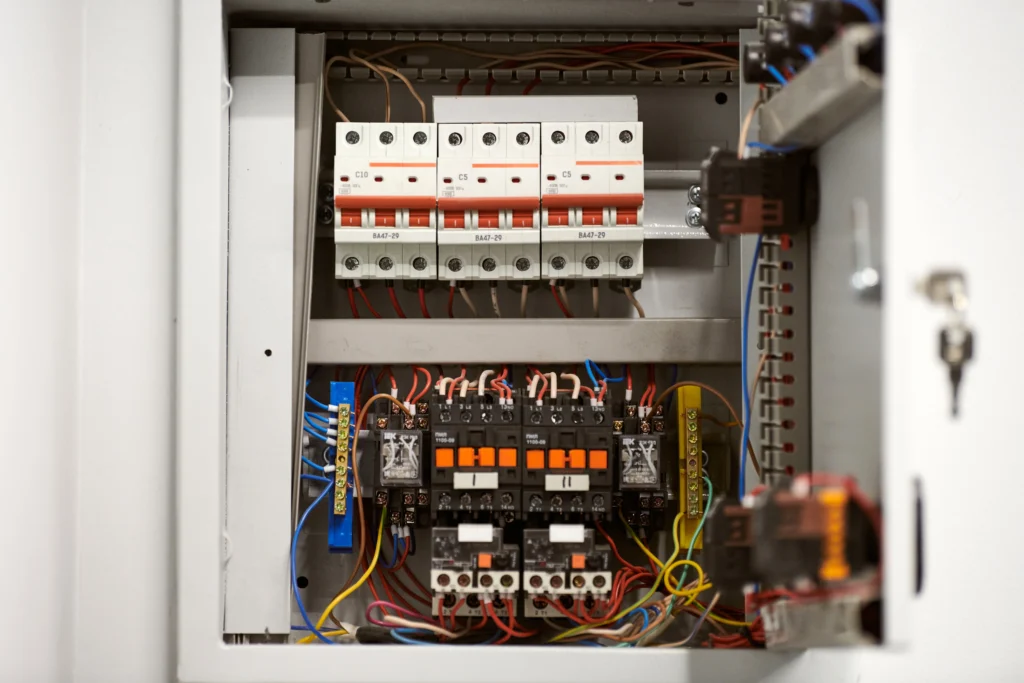
electrical panel repairs
When A Full Panel Upgrade Isn't Necessary
Not every panel issue requires a full replacement. Sometimes a targeted repair is the right call.
A breaker that won't reset or trips under normal load needs to be replaced, not the whole panel. We match the breaker to your panel manufacturer and amperage rating. This is typically a quick repair.
Loose connections inside the panel cause arcing, heat damage, and breaker failures. Tightening lugs and replacing damaged bus bars can extend the life of a panel that's otherwise in good shape.
If you need a dedicated circuit for a new appliance, workshop, or outlet but your panel has open slots, we can add circuits without replacing the panel. If there are no open slots, we'll discuss whether a subpanel or a full upgrade makes more sense for your situation.
Two wires on one breaker is a code violation and a fire risk. We see this constantly in Ocean County homes where a previous owner or handyman added circuits without adding breaker slots. The fix is usually adding a subpanel or, if the panel is already at capacity, upgrading.
We’ll always tell you if a repair will hold or if you’re just delaying an inevitable replacement. No reason to spend $300 on a repair if the whole panel needs to come out in six months.
fAST, FREE & FRIENDLY ESTIMATES EVERY TIME
Get A Same-Day Estimate
Whether your breakers are tripping, your panel is 30 years old, or you’re planning a project that needs more capacity, we’ll give you an honest assessment and a detailed estimate. No pressure, no upselling, just a straight answer on what your panel needs.
Free Panel Estimate
Reach out and get a free quote by filling out the form below, we will be in touch shortly!
Electrical services for ocean and monmouth county
We are Local!
Our team regularly works in both Ocean & Monmouth County!
Frequently asked
Commonly Asked Questions
Yes. Every panel upgrade in NJ requires a permit from your local building department and a post-installation inspection by a licensed electrical inspector. We handle the entire permit process, from application to final inspection. Never hire an electrician who tells you a permit isn't needed for panel work, that's a red flag.
Most residential panel upgrades are completed in one day. We coordinate the utility disconnect in advance so there's minimal downtime. Expect your power to be off for 4-8 hours during the swap, depending on the scope of work.
No. In New Jersey, all electrical panel work must be performed by a licensed electrical contractor and inspected by the local building department. Working inside a live panel without proper training and licensing is extremely dangerous and illegal. This is not a DIY project.
We install Square D, Siemens, Eaton, and GE panels depending on your home's needs and the utility requirements in your area. We don't install budget panels. The panel is the heart of your electrical system and we only use brands with proven reliability.
Yes. Federal Pacific Stab-Lok panels and Zinsco panels are known for breakers that fail to trip during overloads, which means they don't protect your home from electrical fires the way they're supposed to. If you have either brand, we strongly recommend replacing the panel regardless of its age. These panels fail at significantly higher rates than other brands.