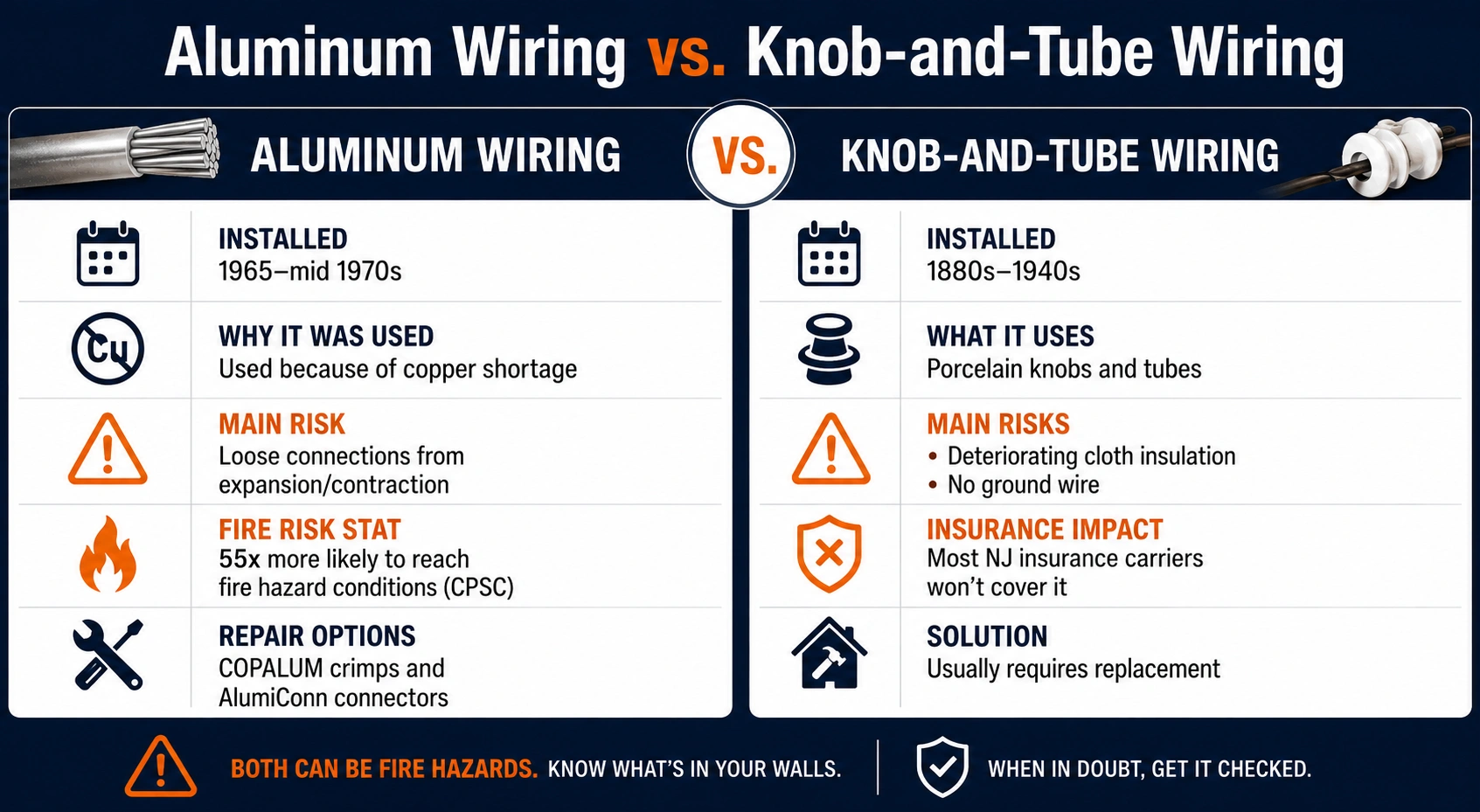
What Is Aluminum Wiring?
What Is Knob-and-Tube Wiring?
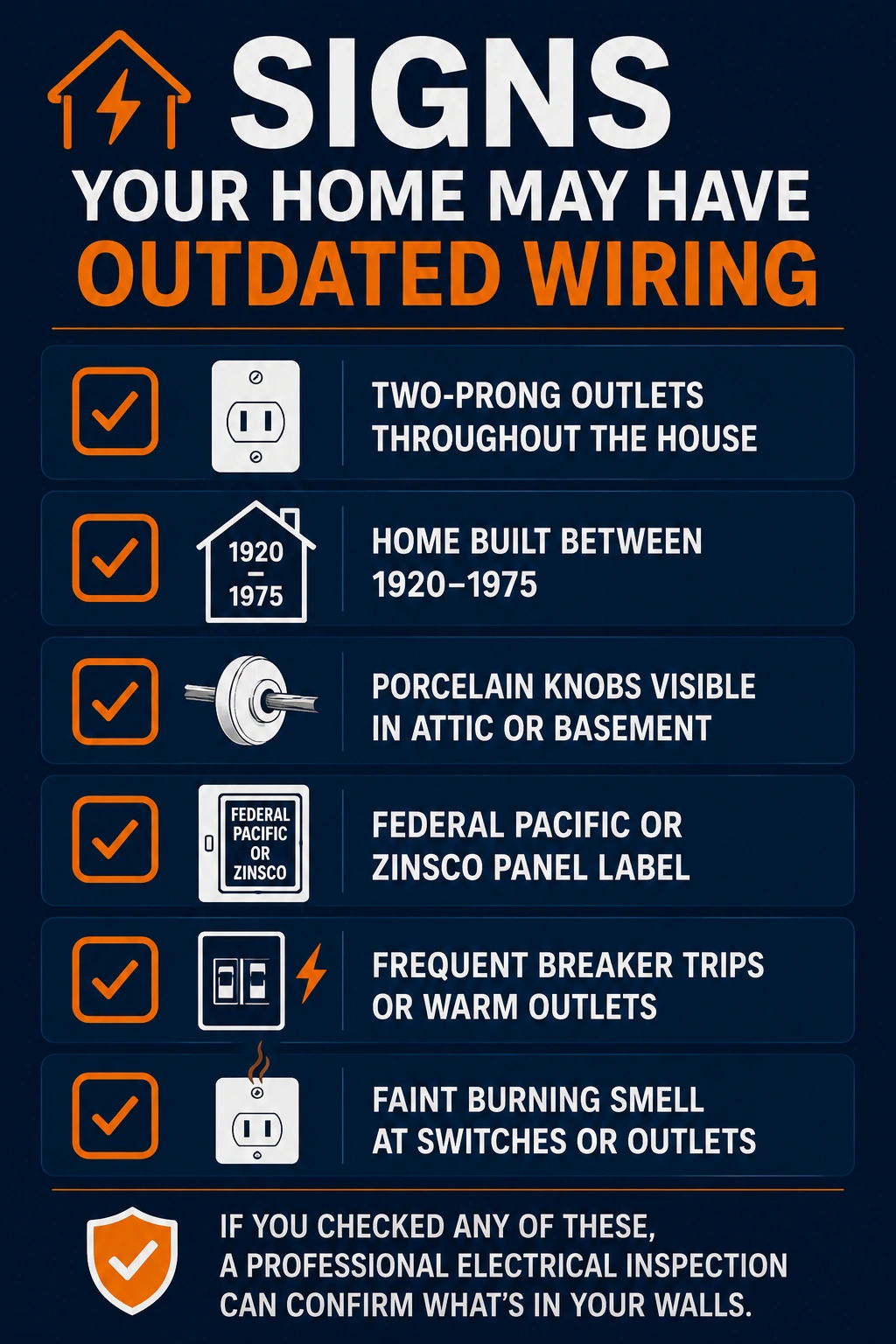
How to Tell If Your Home Has Old Wiring
You don’t always need an electrician to get a first look. A few things to check:
- Two-prong outlets throughout the house are a strong indicator of ungrounded wiring
- If your home was built between 1965 and 1975, aluminum branch wiring is common, especially in Ocean and Monmouth County
- Look in the attic or basement for porcelain knobs holding wires in place. That’s knob-and-tube.
- A panel with a Federal Pacific or Zinsco label can also signal the home’s electrical system hasn’t been updated
- Frequent breaker trips, warm outlets, or a faint burning smell at switches are warning signs something is wrong regardless of wiring type
If you spot any of these, a professional inspection will tell you exactly what’s there and whether it needs attention through a electrical repair.
What Are Your Options?
It depends on what you’re dealing with. For aluminum wiring, full replacement with copper is the most thorough fix, but it’s not always necessary. The CPSC recognizes two connector-based repair methods: COPALUM crimps and AlumiConn connectors. Both create safe copper-to-aluminum transitions at every device terminal without rewiring the whole house. It’s faster, less invasive, and significantly less expensive than a full rewire. For knob-and-tube, replacement is usually the recommendation, especially if the insulation has degraded or the system has been modified over the years. Partial replacement is sometimes possible depending on how much of the original system is still active.
Either way, the first step is the same: have a licensed electrician assess what’s actually in the walls and what condition it’s in. Not every old wiring situation is urgent, but none of them improve with time.
We’ve worked on a lot of homes in Brick, Toms River, and across Ocean County that still had original aluminum branch wiring or knob-and-tube runs hidden in the attic. It’s something we see regularly, and every situation is a little different. Some homes need a full rewire. Others just need the right connectors installed at every device point. With over 15 years of hands-on electrical experience and 120+ five-star reviews from local homeowners, we know what to look for and how to fix it right the first time.
If you’re in the Brick Township or greater Ocean County area and want to know where your home stands, we handle both aluminum wiring remediation and knob-and-tube replacement. Call us at 732-228-2243 for a free, same-day estimate.
Licensed, Insured & Trusted For 10+ Years
Get A Free Opinion Today
If you suspect you may be dealing with old wiring such as Knob-and-tube or aluminum wiring, reach out to our team today and get a free look at your homes wiring.